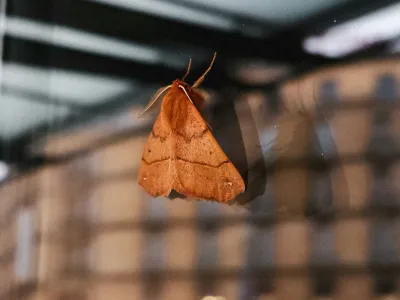
A new study published in the Journal of Insect Conservation shows that moths in Sweden are shifting their seasonal activity in complex and trait-dependent ways as the climate warms. By comparing long-term data from 1975 and 2019, researchers analyzed over 15,000 individuals from 96 species and found that spring-active moths tend to emerge earlier, while autumn species often delay their activity. Summer species showed no consistent trend.
The study also found that species traits strongly influenced these shifts. Moths that overwinter as pupae, have larger body sizes, or can feed as adults were more likely to advance their activity. In contrast, species with highly variable color patterns showed weaker changes in timing.
These findings highlight that not all insects are equally able to adapt to climate change — and that conservation efforts should consider the specific life-history traits that influence vulnerability.
Franzén, M., Francioli, Y., Sjöberg, G., & Forsman, A. (2025). Trait-mediated phenological shifts in moths under climate change: evidence for alternative response strategies. Journal of Insect Conservation, 29, 62. https://doi.org/10.1007/s10841-025-00697-1